Blogging for mental health

Of all of the human accomplishments through the ages, none capture the beauty of our soul to the same degree as art. Art is an activity unique to humans, and is perhaps the most significant way we differ from our animal relatives. Art transcends the individual, the collective, time, and space. Art in many ways is eternal. The impact of one person’s art, if forever forgotten in it’s truest form, is reproduced again and again through the impressions of those that first drank it in.

Which brings me to the topic of today’s blog post – blogging for mental health.

multicolored abstract painting
Photo by Steve Johnson on Pexels.com

I started this blog just over three weeks ago, on what would become the tail end of my time in the Department of Psychiatry. During the spring months, I held many conflicted feelings on the field. I was not happy professionally and yet mental health remained, and remains, something very important to me. My self reflection led to a conclusion – that I needed an outlet. So I started the blog.

And it’s helped. I went into medicine for a reason, to be a support for those in need. I hope I’ve lent myself to you. But I cannot understate the support you’ve given me by helping my spirit be at peace!

I’m not alone in this. The catharsis of art is undeniable and the positive impacts of art on our mental health have been documented for decades. Our human languages are beautiful, and often fail to describe the emotions many of us are feeling. Art provides a medium for expression, unquestionable expression, because you know at the end of the day that you’ve done this for you.

On a clinical level, I often recommend art to patients when they are suffering. And even when they are not. I’m often met with a comments like, “I don’t know how to paint,” to which I usually respond, “neither do I!” Art can be as simple as rearranging your bookshelf. Taking in a movie. Or writing a blog.

Dr. Travis Barron is a resident physician in Toronto, Canada.

How being in crowds (may have) caused psychosis

It’s Canada Day, and boy are you hungry. You have a hankering for sticky meats and while the drool begins to pool in your mouth, you remember. The Mandarin Chinese Buffet is having a free Canada Day buffet!

You hop on the subway and go to your nearest Mandarin. When you arrive at your stop, you wonder, “what’s that noise?” You exit the station and then it hits you. The noise was the massive crowd of hundreds of people who had the exact same idea as you. Just a few hours earlier.

img_20190701_110150.jpg

For me, those crowds were outside of my home, and man what a spectacle. Hundreds – maybe a thousand? – of people lined up to stuff their faces. This crowd is one thing at ten in the morning after a nice breakfast. It’s an entirely different beast at two in the afternoon with a rumbling stomach. Tensions start to build (indicated by the police presence that has slowly built up over time), and it’s easy to imagine how something could go wrong.

But it doesn’t. Against what seems tremendous odds, these events, as most do, go by without a major hitch or injury.  It leads one to wonder, what exactly allows us to do accomplish this as humans?

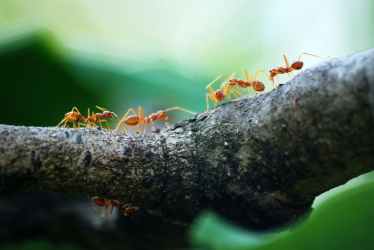
If you’ve grown up in a rural community like myself, you’re probably familiar with ant hills. If, like me, you essentially lived in a forest, there might be a few different ant hills around. Inevitably, as kids do, you take an ant from two different colonies and leave them together.

Spoiler: they fight to the death.

macro photo of five orange ants
Photo by Poranimm Athithawatthee on Pexels.com

This obviously doesn’t happen with humans. In fact, you can take two humans who couldn’t be from more different walks of life, and often times, a relationship will form. Why have we evolved this way? Well, it helps us! Humans are social animals at their very core, and our human society is the only society (think meercats, honey bees, other social animals), that have built a civilization. Civilization has allowed us as a species to thrive and master the planet like none before us. What does it take to build a civilization?

Trust, for one. Humans have needed to evolve trust of one another so that we can take full advantage of the world’s resources. We need to trust that by doing our jobs (which often times have absolutely nothing to do with the basic necessities of life), we get paid, and we need to trust that by getting paid, we are able to buy food and resources to sustain ourselves. It would be difficult to wake up every morning and be an insurance broker if that didn’t translate into food, shelter, and security for your family.

Trust, however, can only go so far. There are inevitably people among us who would violate that trust, and who would harm us, were our defenses so low. This problem has been increasingly important as humans live in denser and denser cities. It has required us to develop suspicion, to complement our trust of each other. In big cities, a mild level of paranoia keeps us safe. It makes us lock our doors at night, avoid the dark alley, and be aware of people acting strangely or dangerously around us. To simplify things, you could say all of us have inherited a little suspicion from our parents.

Sometimes, people can inherit too much suspicion. We may call this paranoia, or psychosis. This might make you believe people want to harm you, or that you are being monitored. You might begin to take meaning from completely innocuous things, due to hyperviligance. Think of psychosis as our natural suspicion in overdrive, suspicious traits that have become too concentrated. This perhaps lends to the fact that living in an urban environment significantly increases your risk of developing psychosis.

This theory is one of many behind the question, why does psychosis exist? We may never know for sure. What I do know, is that the human mind is fascinating, and we can often under appreciate the profound significance behind something as apparently simple as being in a crowd.

Like more on psychosis? Try this out!

Dr. Travis Barron is a resident physician in Toronto, Canada.
Mental illness exists for a reason (part 4)

Thanks for reading and keeping up with this series – Mental illness exists for a reason! In part 1, part 2, and part 3, we discussed the evidence for genetic control of behaviour in primates, and found that variability within a species’ genome allows that species to be adaptable. Humans are an example of a species with a variation in genes within  their genome, allowing us to become one of the most successful species on the planet! We discussed that because of this variability, some of us succeed in cities, rural areas, at high elevations, or thrive working underground. It also means that not all of us will succeed – at least in every environment.

So how do we guide treatment and recovery, with this understanding of mental illness?

three toddler eating on white table
Photo by Naomi Shi on Pexels.com

When I was in grade school, as there tends to be, there was always the one problem child. Teachers would scorn this child, parents would be caught whispering about the kid in hushed after-dinner conversations as they dispersed the latest rumors coming from the school. This child had bad grades, would act out in class, and was the regular example of how not to act when your parents warned you about the repercussions not studying. “Do you want to end up like Johnny? No future?!” You could say that in the eyes of the masses, this child was struggling.

Johnny felt he was struggling too. He didn’t seem to jive with the classroom environment. He had a lot of pent-up energy he felt he had nothing to do with. He intended well, but ultimately was ambivalent regarding his grades. ‘What will I ever need that for, anyway?”

I eventually moved on from grade school, and high school, and university, and medical school. Years later, on a short trip home to Newfoundland, I saw Johnny in the supermarket, He was with his beautiful family, and had three kids. We got to talking and it turned out he entered trade school after high school, was at work a few years later, and now actually owned a home. The thing that stuck out the most was he was glowing. Absolutely glowing., I couldn’t help but feel, this guys got it all figured out.

But Johnny was struggling. So what happened?

Not everybody will thrive everywhere. I could think of lots of examples from my office, but I thought that this example was more down to earth and a great example of how things are not always as they seem.

Johnny was never meant to sit in a classroom, and was intended to use his hands. When given the wide open expanse of a work day and a welders hat, he found his niche, and owned it. The reality is, the filtration system this is our school system didn’t work for him, and he struggled.

The conclusion? Sometimes, a change in environment is the most important intervention when you are struggling with a mental illness. If you live away from your family and friends, and are struggling, my pill will have limited benefit. Until jobs can stop requiring people to work 50, 60 hours a week for next-to=nothing, people will suffer.

Editor’s note: As if it wasn’t complicated enough, I’ll add an asterisk! Often times, when you are in the throes of a mental illness, your judgement can be distorted. In general, I recommend people do not make life-altering decisions while severely unwell. A discussion with your doctor on how to best approach this scenario is my recommendation.

Not all mental illness is a result of person-environment incompatibility. There are true, organic mental illnesses out there. Often times, a combination of medication, therapy, and life changes, is required.

I would like to credit Dr. Albert Wong at the Centre for Addiction and Mental Health for inspiring most of the content of parts 1-3 of this blog series.

Dr. Travis Barron is a resident physician in Toronto, Canada.